

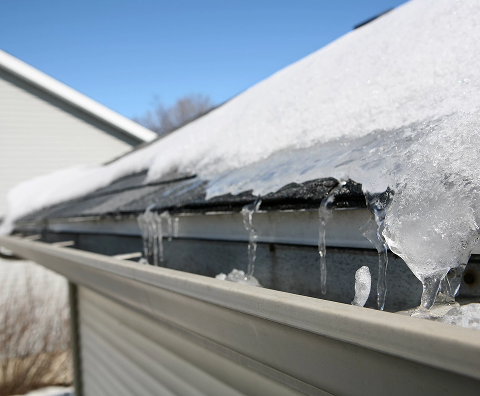
An ice dam forms when heat escaping from your attic melts snow on the upper roof, which then runs down and refreezes at the colder eaves, building a ridge of ice. That ridge traps water behind it, and the trapped water can back up under your shingles and leak into your home. Flathead Valley homes are especially prone to ice dams because of the combination of heavy snowfall, repeated freeze-thaw swings, and older attic insulation common in the area.
How Ice Dams Actually Form
Snow accumulates on the roof. Heat escaping from the living space below warms the upper roof deck unevenly, melting the snow near the ridge. That meltwater runs down toward the eaves, which sit over the unheated overhang and stay colder. There, it refreezes, and over time builds into a ridge of ice. Water continues to pool behind that ridge until it finds a way under the shingles — and into your home.
Why This Is a Bigger Problem in the Flathead Valley
- Freeze-thaw cycles: the Kalispell area sees repeated swings between thaw and freeze rather than one long deep freeze, which means more melt-and-refreeze cycles and more opportunity for ice dams to build
- Heavy snow loads that sit on roofs for weeks at a time
- Many homes in the area have attic insulation and ventilation that hasn’t been updated in years, making uneven roof deck temperatures more likely
The Real Cost of Ignoring Ice Dams
- Water intrusion into attic insulation, ceilings, and walls
- Mold and mildew risk once moisture gets trapped inside
- Damaged gutters, since the weight of built-up ice can pull them away from the roofline
- Granule loss and shingle damage from DIY ice removal attempts
How to Prevent Ice Dams
- Insulate and air-seal the attic floor — this is the single biggest factor, since it keeps heat where it belongs instead of leaking into the roof deck
- Ventilate the attic properly — balanced soffit and ridge venting keeps the roof deck temperature closer to the outdoor air temperature
- Install ice-and-water shield along the eaves during a re-roof — standard practice on every roof Fly Roofing installs
- Keep gutters clear of debris heading into winter
- Rake snow off the lower roof edge after heavy snowfalls, using a roof rake from the ground rather than climbing up
What to Do If You Already Have an Ice Dam
- Don’t chip at it with an axe or hammer — this damages shingles and can make the problem worse
- A calcium chloride-filled sock or tube laid perpendicular across the dam can melt a channel for water to drain
- Steam removal by a professional is the safest method for larger ice dams
- Have your attic insulation and ventilation assessed afterward so the same problem doesn’t repeat next winter
How Fly Roofing Helps
Our free inspections look at attic ventilation and insulation alongside the roof itself, since ice dams are as much about what’s happening under the roof as on top of it. Every re-roof we install includes proper ice-and-water shield, and we can advise on ventilation upgrades as part of a repair or replacement.
Ready to Talk to a Local Roofer?
If your home has dealt with ice dams before — or you’d rather prevent the first one — Fly Roofing offers free inspections that look at your attic and roof together.
Request a free estimate from Fly Roofing
Frequently Asked Questions
What causes ice dams on a roof?
Ice dams form when heat escaping from the attic melts snow on the upper roof, which then refreezes at the colder eaves and builds up into a ridge of ice that traps water behind it.
How do you get rid of an ice dam?
Avoid chipping at it directly. A calcium chloride sock laid across the dam can create a drainage channel, and professional steam removal is the safest option for larger dams.
Does homeowners insurance cover ice dam damage?
Many policies cover the resulting water damage, though coverage varies by insurer and policy. It’s worth reviewing your specific policy or asking your insurance agent directly.
How can I prevent ice dams before winter?
Proper attic insulation and air sealing is the most effective prevention, followed by balanced attic ventilation and ice-and-water shield underlayment installed along the eaves.
Does a metal roof prevent ice dams?
Metal roofing reduces ice dam risk because snow sheds more easily, but attic insulation and ventilation are still the primary factors, regardless of roofing material